Palazzo delle Papesse History - Architecture and Cultural Evolution
Discover how Palazzo delle Papesse evolved from elite architecture to a dynamic cultural venue in Siena.
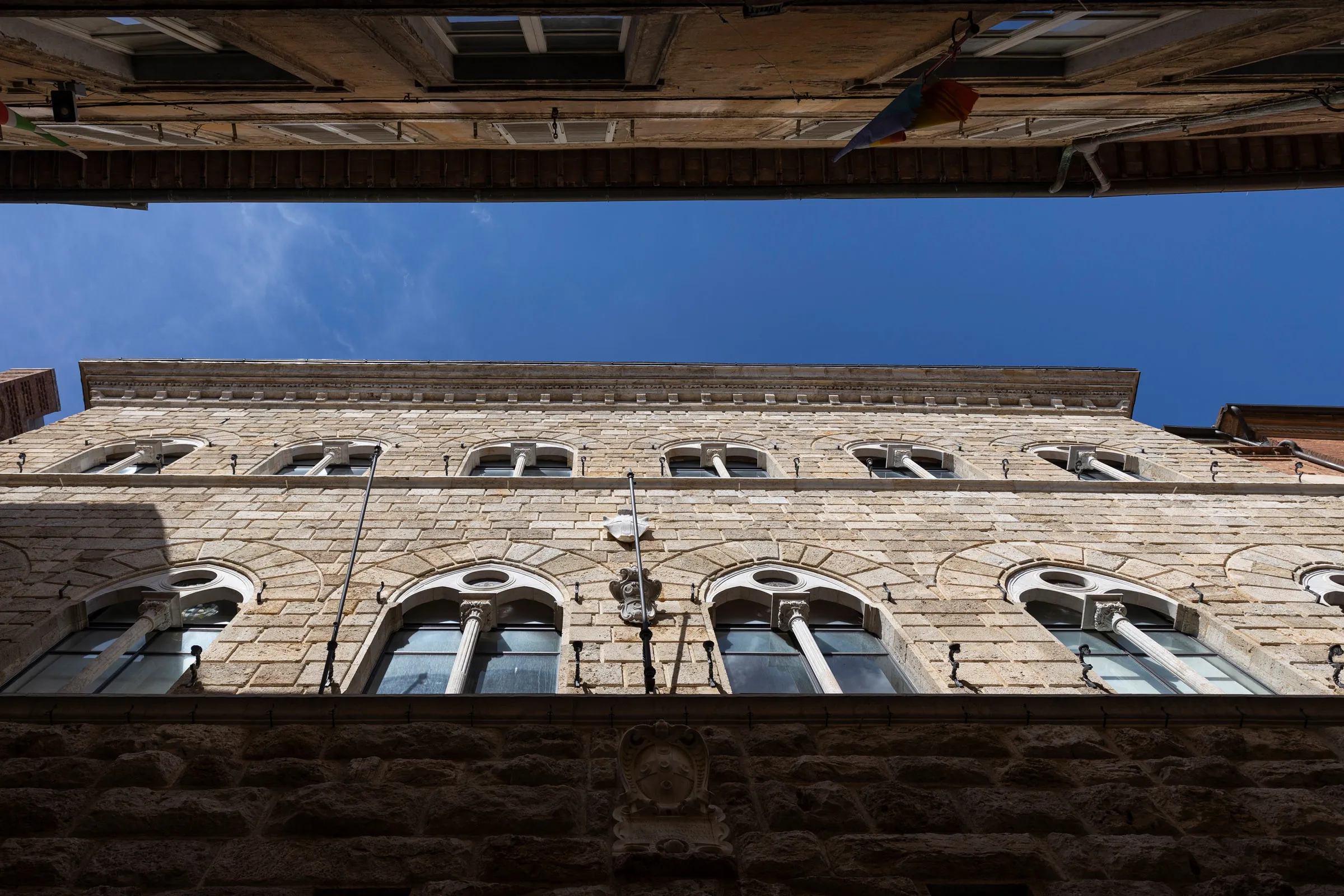
Some buildings are monuments to power. Others become laboratories of meaning. Palazzo delle Papesse has been both.
Historical arc
- Origin in elite urban patronage
- Transformation through changing civic priorities
- Contemporary reactivation as cultural space
Architectural reading grid
| Element | Original function | Current experience |
|---|---|---|
| Facade order | Social signaling | Visual identity |
| Interior sequence | Domestic hierarchy | Exhibition rhythm |
| Openings/light | Climate and control | Atmosphere and staging |
Why this matters for visitors
Understanding the building's first life helps you read its present exhibitions with more nuance.
Short takeaway
Palazzo delle Papesse is not "old shell, new content." It is an ongoing dialogue between structure and curation.
Reading the palace through time
As you move through the building, imagine each room with two transparent layers: its original social function and its current cultural use. The overlap between those layers is where the most interesting tension appears.
A former space of hierarchy can become a space of experimentation. A corridor designed for domestic movement can become curatorial pause. These shifts are not accidental; they show how architecture can be repurposed without losing memory.
Try a simple exercise in one gallery: identify one element that signals continuity and one that signals reinvention. Doing this repeatedly helps you see the palace as a living system rather than a static monument.
Visitor takeaway
You are not only visiting an exhibition; you are visiting a long negotiation between patronage, urban identity, and contemporary interpretation.
关于作者

Siena Editorial Team
这份指南写给希望“真正读懂”锡耶纳大教堂的旅行者:不仅看见建筑本身,也看见它背后的历史语境与城市气质。目标很简单:帮助你理解每个空间的意义,让参观成为一段连贯而深刻的体验。
Tags
Comments (0)
Loading comments...