Piccolomini Library in 30 Minutes - Manuscripts, Frescoes, and Viewing Plan
Maximize a short visit to the Piccolomini Library with a precise method focused on manuscripts and chromatic storytelling.
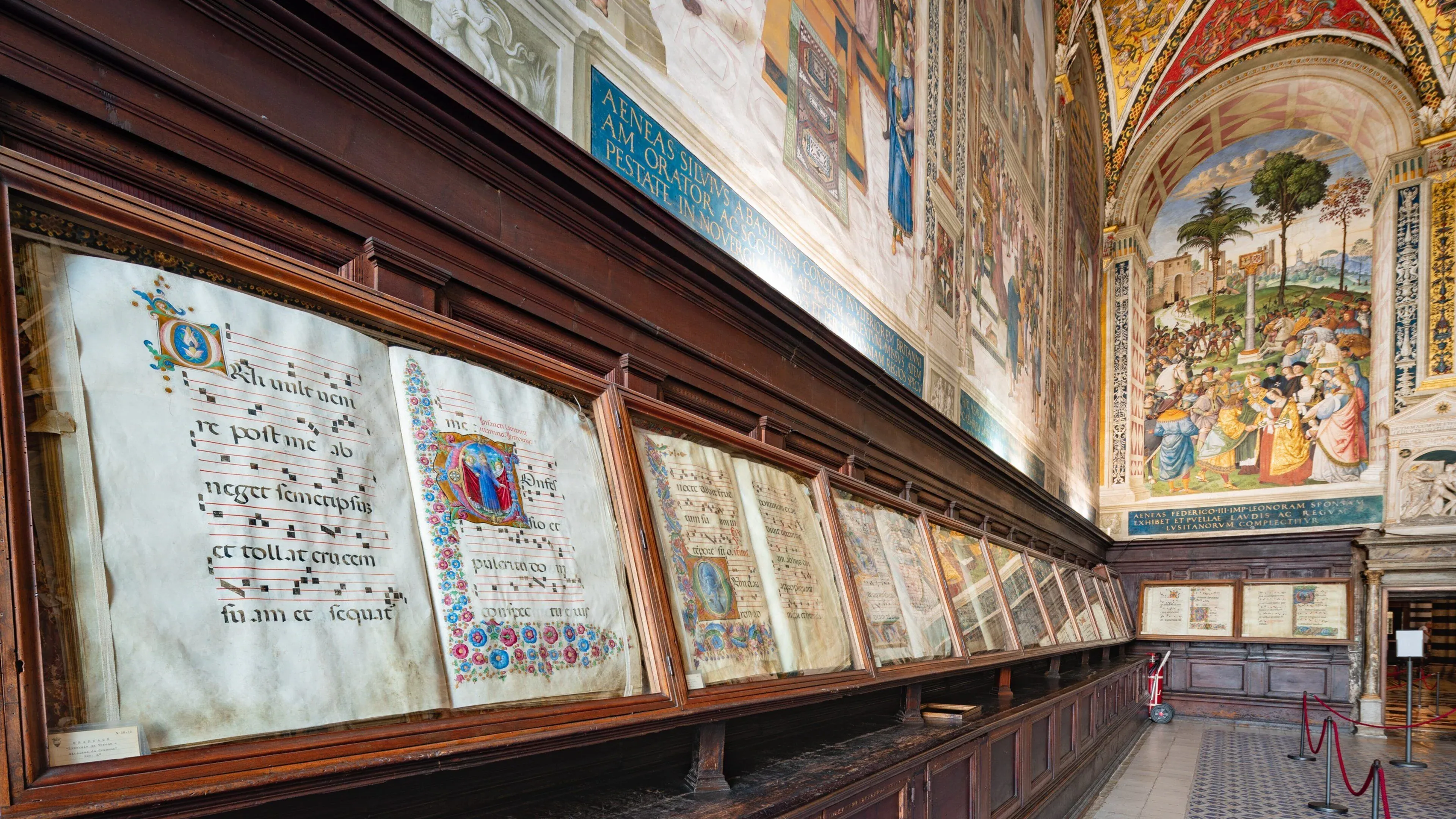
Thirty minutes can be enough in the Piccolomini Library, if you visit with intent.
30-minute script
- 8 min: ceiling scan
- 12 min: two wall scenes in depth
- 6 min: manuscript cases
- 4 min: recap and final look
How to compare two scenes quickly
| Criterion | Scene A | Scene B |
|---|---|---|
| Crowd density | ||
| Dominant hue | ||
| Emotional tone |
Manuscript viewing cue
Focus on letterforms, border decoration, and color preservation before trying to read content.
Reflection prompt
What changed between your first and last glance at the room?
The right question can turn a short visit into a deep one.
The 30-minute deepening trick
Use a timer for each segment and protect it from distractions. Short visits become shallow mainly when we drift between tasks. A clear timer creates focus and lets you stay present inside each phase.
When comparing two scenes, do not aim for exhaustive analysis. Aim for one strong contrast and one subtle similarity. That pair is enough to reveal artistic intention without overwhelming your attention.
At the manuscript cases, move from far to near to far again. First observe overall color and structure, then inspect letterforms and borders, then step back to see how the object reads as a whole. This rhythm prevents detail fatigue.
Quick exit note
Write one sentence that begins, "In this room, color behaves like..." Your answer will capture your interpretation better than any checklist.
Over de auteur

Siena Editorial Team
Deze gids is geschreven voor reizigers die de Duomo di Siena met context, rust en lokaal gevoel willen beleven, en niet alleen snel een checklist willen afwerken. Het doel is eenvoudig: duidelijk maken wat elke ruimte betekent, zodat je bezoek samenhangend en memorabel wordt.
Tags
Comments (0)
Loading comments...